Before we study email strategies, let’s take a moment to talk about content itself.
Effective email marketing prioritizes building rapport and trust through valuable, purpose-driven content rather than direct selling. This strategy fosters brand loyalty and repeat business by ensuring every message is relevant and high-quality. To succeed, provide meaningful information that serves a clear purpose for your audience.
The Attention Span Myth vs. Reality: You might have heard the famous claim that the human attention span has dropped to a mere 8 seconds, supposedly shorter than that of a goldfish. While often attributed to a 2015 Microsoft Canada report, modern research has debunked this as a complete urban myth. Attention isn’t a fixed number; it depends entirely on how engaging the content is.
However, the digital shift is real. In today’s crowded inboxes, readers filter out boring emails faster than ever. This is why mastering an effective email marketing strategy is crucial. To survive the quick scroll, your content needs to be incredibly sharp from the very first word. By applying professional email copywriting tips, you can instantly hook your audience and ensure your messages get read rather than ignored.
Understanding the Core of Writing Email Marketing Content
Have you ever spent hours crafting an email, hit ‘send’, and then… crickets? I know exactly how frustrating that feels. In today’s crowded inbox, grabbing your reader’s attention is harder than ever. Implementing a solid email marketing strategy combined with proven email copywriting tips is essential before you even start drafting your first word. Before I dive into the advanced strategies I’ve prepared for you, you might ask: What exactly is writing email marketing content?
To me, writing email marketing content is much more than just pitching a product. It is the art of crafting engaging, persuasive, and targeted messages sent directly to your subscribers’ inboxes. My core goal here is to help you build real relationships, provide immense value, and drive specific actions, such as sales or website visits.
I’ve noticed that a lot of email content fails today because it lacks a strong hook and a human touch. To grab attention instantly, I always make sure my emails are scannable; I highly recommend keeping your paragraphs to 2-3 lines so your mobile users can read them without feeling overwhelmed.
Ready to transform your emails? Let me show you exactly how it’s done.
How to Write Customer-Centric Email Content
The most effective email content is always about the reader, not just your brand. So, how can you master how to write high-converting emails that actually resonate? The secret is to focus on the direct benefits your product brings to the user rather than just listing features. Write in the second person using pronouns like “you” and “your” so the content feels like a personal, one-on-one conversation.
To structure your email for maximum conversions, top marketers rely on proven copywriting frameworks like AIDA (Attention, Interest, Desire, Action) or PAS (Problem, Agitate, Solution). Identify the customer’s problem, agitate it, and present your product as the ultimate solution. Your value is not in what you offer, but in what’s in it for your readers.
- Geolocation & Cultural Adaptation: If your business operates internationally, tailor your content to the subscriber’s geographic location. Since every country and region has distinct cultures and languages, pay attention to local customs and traditions to prevent cultural misunderstandings.
- The Power of Storytelling: Instead of just sharing dry data, incorporate short stories into your emails. Discussing characters, challenges, and solutions helps forge an emotional connection with your audience, making the email more engaging.
- Apply Psychological Triggers: Infuse consumer psychology into your emails. Use FOMO (Fear of Missing Out) by highlighting limited-time offers to compel immediate action. Additionally, using images of human faces (rather than generic stock photos) in your content and offers can significantly boost trust and emotional connection.
- Leverage Reciprocity: Always offer free, valuable incentives (like a PDF guide, checklist, or exclusive resource) to your subscribers. When you provide value upfront, readers are psychologically inclined to reciprocate by engaging with your content or making a purchase.
By focusing on customer-centric email copywriting, you ensure your messaging always addresses subscribers’ core needs first.
5 Essential Email Marketing Content Writing Tips
1. Subject Line Mastery & ‘From’ Name:
Your subject line determines whether recipients open your email or scroll past it. Applying smart email copywriting tips here is critical to grab immediate attention. If you want a deep dive into formulas, you can check out our complete guide on how to write perfect email subject lines to boost your open rates instantly. Keep it short (under 50 characters) and limit punctuation to no more than 3 marks to avoid looking like spam.
Mastering this single element is the first major step in learning how to write high-converting emails that consistently drive results. Equally important is your ‘From’ Name; ensure it clearly identifies you or your business (e.g., “Sarah from Digital Vibes”) so recipients immediately understand who is sending the email and can trust the source.
- Mobile-First Subject Lines: Aim to keep your subject line under 30 characters. This ensures that mobile users can easily see the entire message, and the title is not truncated.
- Targeted Personalization: Including only the subscriber’s name (First Name) in the subject line can improve your open rate by up to 14%, as it gives the email a truly personal touch. Understanding the importance of email personalization is key to building long-term trust with your audience.
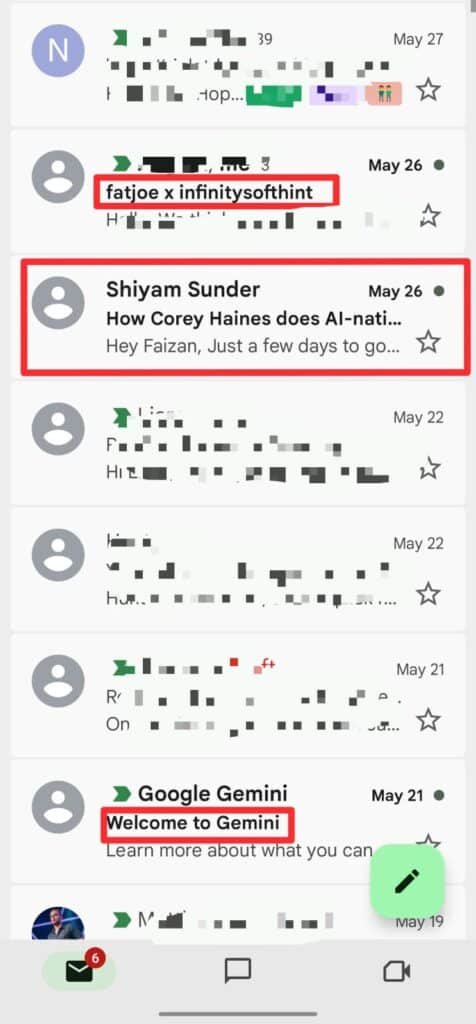
Notice how “How Corey Haines does AI-nati…” gets cut off on mobile, while “Welcome to Gemini” displays perfectly in full. Your subject line should always be fully readable on a phone screen.
Template Idea: “[First Name], quick question about your [Pain Point]?”
2. The Preview Text:
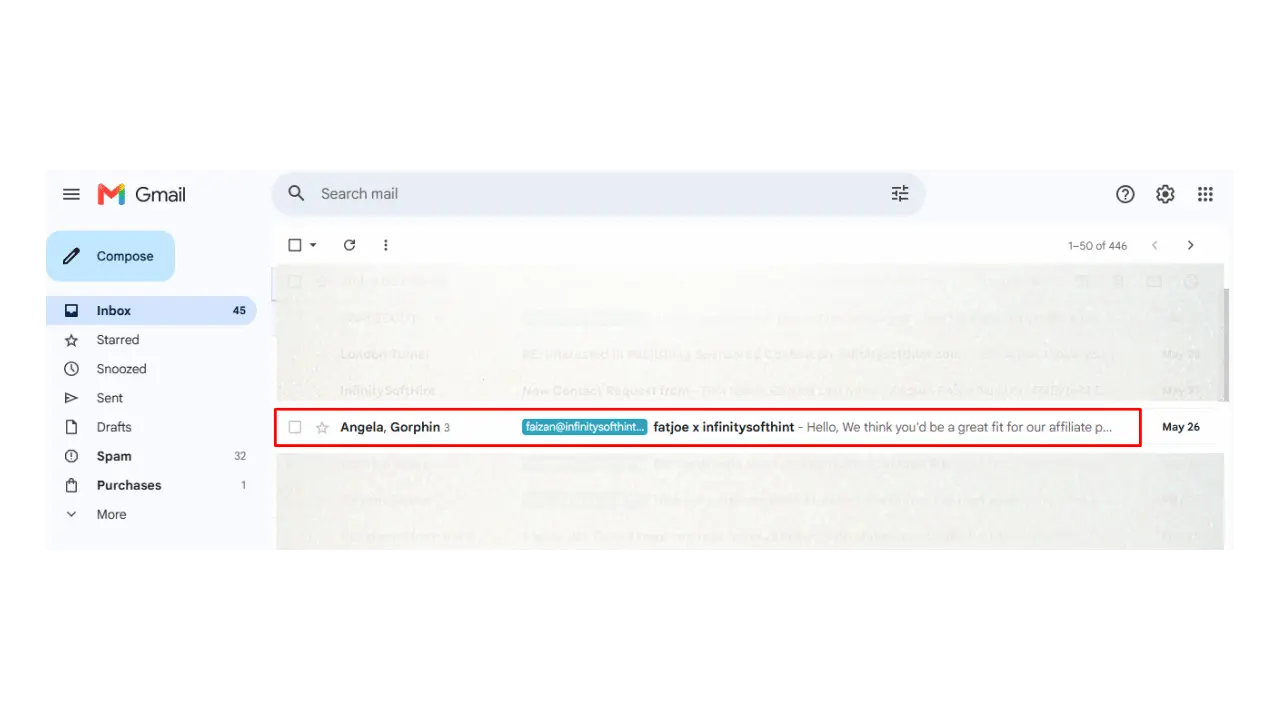
The preview text (the short line following the subject line) is your email’s compelling trailer. Don’t waste this space on generic sentences; use it to complement your subject line and tease the core benefit of opening the email.
- Don’t Repeat, Extend: Never repeat words from the subject line in the preview text. It should be an extension of the subject line so that both together create an engaging, cohesive story.
3. Brevity (Keep it Short) and the 80/20 Rule:
A common question marketers have is: What is the ideal length for marketing email body content?
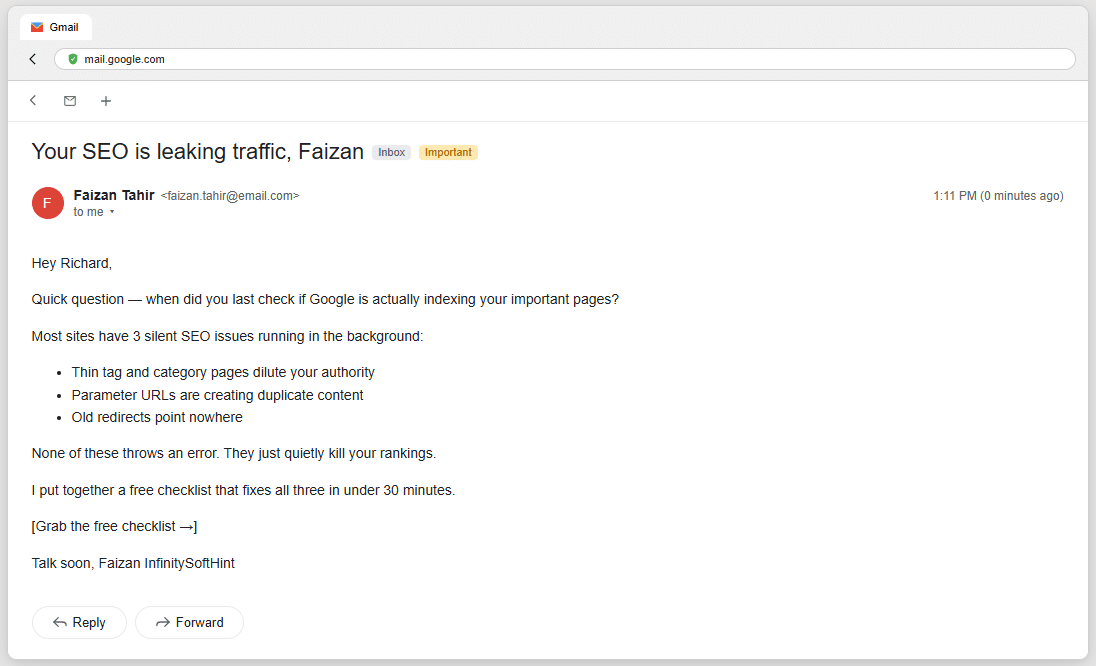
In 2026, nobody has time to read long, text-heavy emails. A successful email marketing strategy relies on short, focused, and scannable emails to perform best.
By blending brevity with customer-centric email copywriting, aim to keep the body of your email between 75 and 150 words (and strictly under 200). Furthermore, maintain an 80% text to 20% image ratio to ensure your email loads quickly and doesn’t trigger spam filters. If you prefer a visual approach, using infographic emails in email marketing can be highly effective, provided you balance them with enough body text. Use bullet points and break up paragraphs into 2-3 lines to make it highly scannable for mobile devices.
- Avoid Excessive Promotion: Refrain from using overly promotional or commercial language (such as ‘Buy Now,’ or ‘Big Sale’) in every email. The tone should feel like you are assisting a friend, rather than aggressively trying to sell them something.
Pro-Tip: The Plain Text Advantage. While HTML allows for visuals, plain text emails often achieve higher open rates and deliverability (up to 42% higher). Because they mimic a personal, one-on-one message from a colleague or friend, they feel more authentic and are less likely to be flagged as ‘promotional’ by spam filters or the reader’s brain.
4. A Clear & Frictionless CTA:
Every email needs one primary Call-to-Action (CTA).
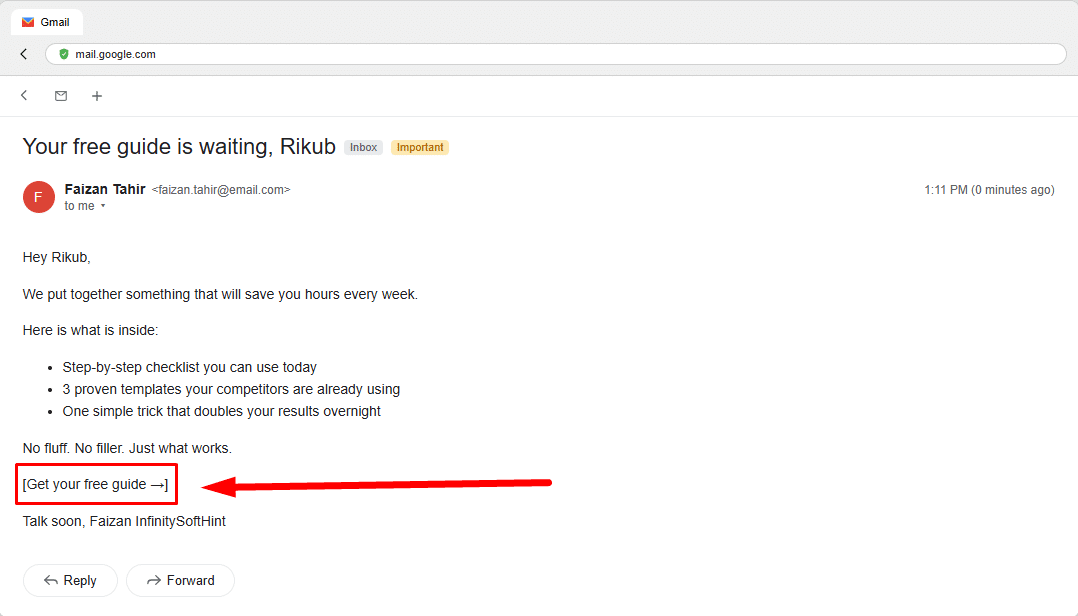
- Eliminate Friction Words: Never use words like “Download”, “Apply”, “Order”, or “Submit” on your button. These words suggest to the mind that a difficult task must be performed (creating cognitive friction).
- Use Frictionless Words: Instead, pair “Get” or “Learn” with a benefit (E.g., “Get your free guide” or “Learn how to save time”). Changing just one word can increase click-through rates by up to 14.7%.
5. Avoid Spam Filters:
To ensure your email lands in the inbox, avoid writing in ALL CAPS and refrain from overusing spam-friendly words like “Free”, “Win”, or “Buy”. Sending too many messages at once can trigger filters or appear to be malicious activity; understanding what mail flooding is can help you avoid these technical pitfalls.
- The Whitelisting Strategy: The easiest way to avoid spam filters is to ask your subscribers to save your email address to their “Contacts” (or Address Book) in their email client. This makes your deliverability 100% safe.
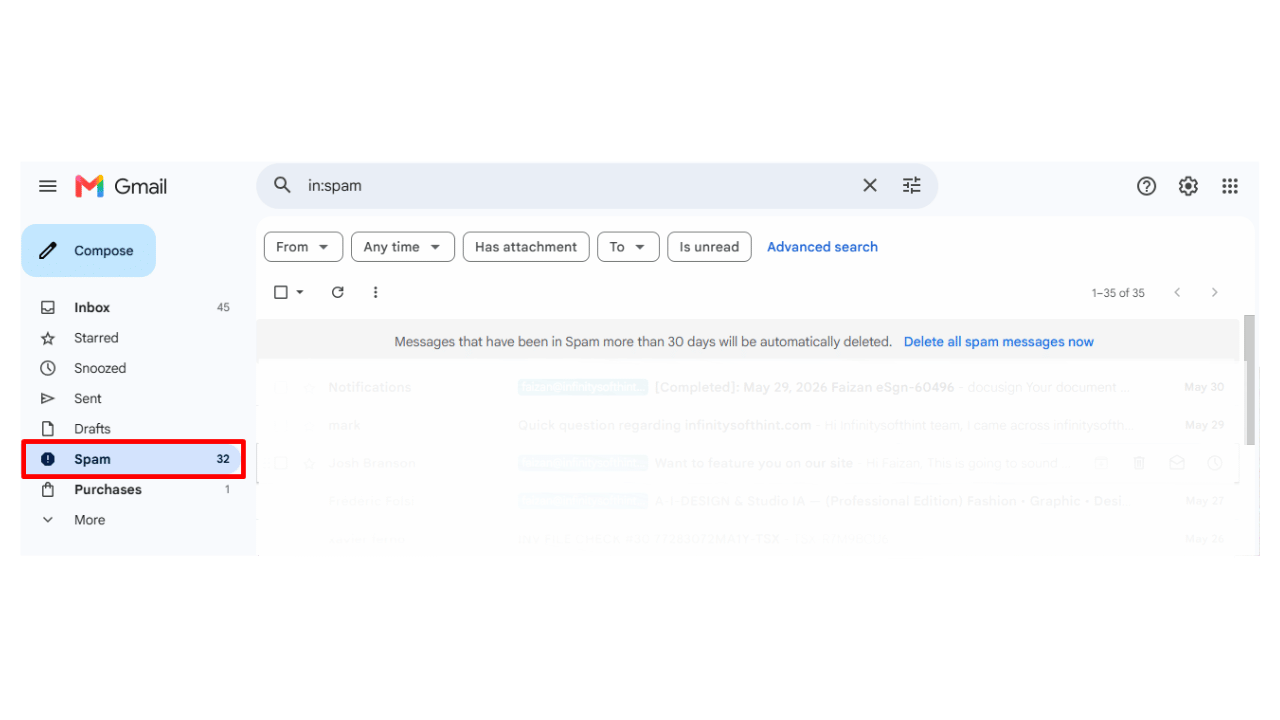
This is where your email ends up when spam filters are triggered — buried in a folder most people never check, and automatically deleted after 30 days. Avoiding ALL CAPS, overused spam words like “Free” or “Win”, and adding your sender address to subscriber contacts keeps you safely in the inbox.
Technical & Image Best Practices (New Additions)
To ensure high deliverability and professional appearance while writing email marketing content, adhere to these technical guidelines and image best practices:
| Element | Best Practice Guideline |
| Text-to-Image Ratio | Maintain an 80% text to 20% image ratio to avoid spam filters. Never send image-only emails. |
| Logo Placement | Always place your brand logo in the upper left-hand side of the email. |
| Image Dimensions & Format | Use .jpg, .gif, or .png formats only. Recommended minimum width is 750px for consistent quality. |
| Alt Text | Ensure the image file name describes the image, as this serves as the fallback alt text for email clients blocking images. |
Real-World Email Marketing Content Examples
Seeing is believing. Let’s compare a generic email with a high-converting, benefit-driven email copy that perfectly follows the guidelines (under 200 words, single CTA, PAS framework):
Bad/Generic Copy (Focuses on Features & Multiple CTAs):
“Our new software includes automated reporting and data analytics. It has a fast dashboard and exports to PDF. Buy now to get access. Also, follow us on social media and check out our blog!”
Why it fails: It’s all about the product, lacks personalization, uses friction words like “Buy”, and confuses the reader with 3 different CTAs.
Good/High-Converting Copy (PAS Framework & Single CTA):
Problem: Tired of spending hours building manual reports every Friday?
Agitate: It drains your energy and keeps you working late into the weekend, taking time away from what really matters.
Solve: Our new automated reporting tool does the heavy lifting for you in just one click, giving you those 5 hours back.
[Single Call-To-Action Button: Start Your Free Trial]
Why it works: It speaks directly to the reader’s pain point, keeps the total word count well under 200 words, and focuses entirely on driving the user to ONE clear action.
- Leverage Testimonials (Social Proof): Always include short reviews or success stories (testimonials) from real customers alongside your email content or offers. Seeing others benefit immediately boosts the trust level of new subscribers.
Tracking Your Success: Key Email Metrics (KPIs)
Even the most perfectly written email is useless if you don’t measure its performance. Tracking these Key Performance Indicators (KPIs) is essential to understanding what resonates with your audience and where your strategy needs refinement.
- Open Rate: This metric directly measures the success of your Subject Line and ‘From’ Name. A high Open Rate indicates your initial hook is working.
- Click-Through Rate (CTR): CTR reveals how compelling your content and Call-to-Action were. It shows the percentage of recipients who clicked a link inside the email, proving the persuasiveness of your copy.
- Bounce Rate: This is a crucial health metric for your email list. High Bounce Rates (above 2%) indicate poor list quality or technical issues, hurting your sender reputation.
- Unsubscribe Rate: A rising Unsubscribe Rate signals that your content is losing relevance or your sending frequency is too high. Monitor this closely to keep your audience engaged.
Closing Strong: P.S. Lines and Personal Sign-offs
The postscript (P.S.) is a critical piece of real estate that many readers naturally look for—often before they read the main email body. Use a bold P.S. line after your signature to restate your primary Call-to-Action (CTA), reinforce an offer, or add a brief, personal note. This serves as a powerful final opportunity to drive conversions or immediate action.
Personalize Your Sign-off: End your email with a warm, personal closing (like ‘Best regards, [Your Name]’) rather than a corporate sign-off. Ensure your signature block clearly includes essential contact information and maintains a human touch to foster a direct, one-on-one connection with the customer.
Next-Level Tactics: AI and Optimal Sending Times
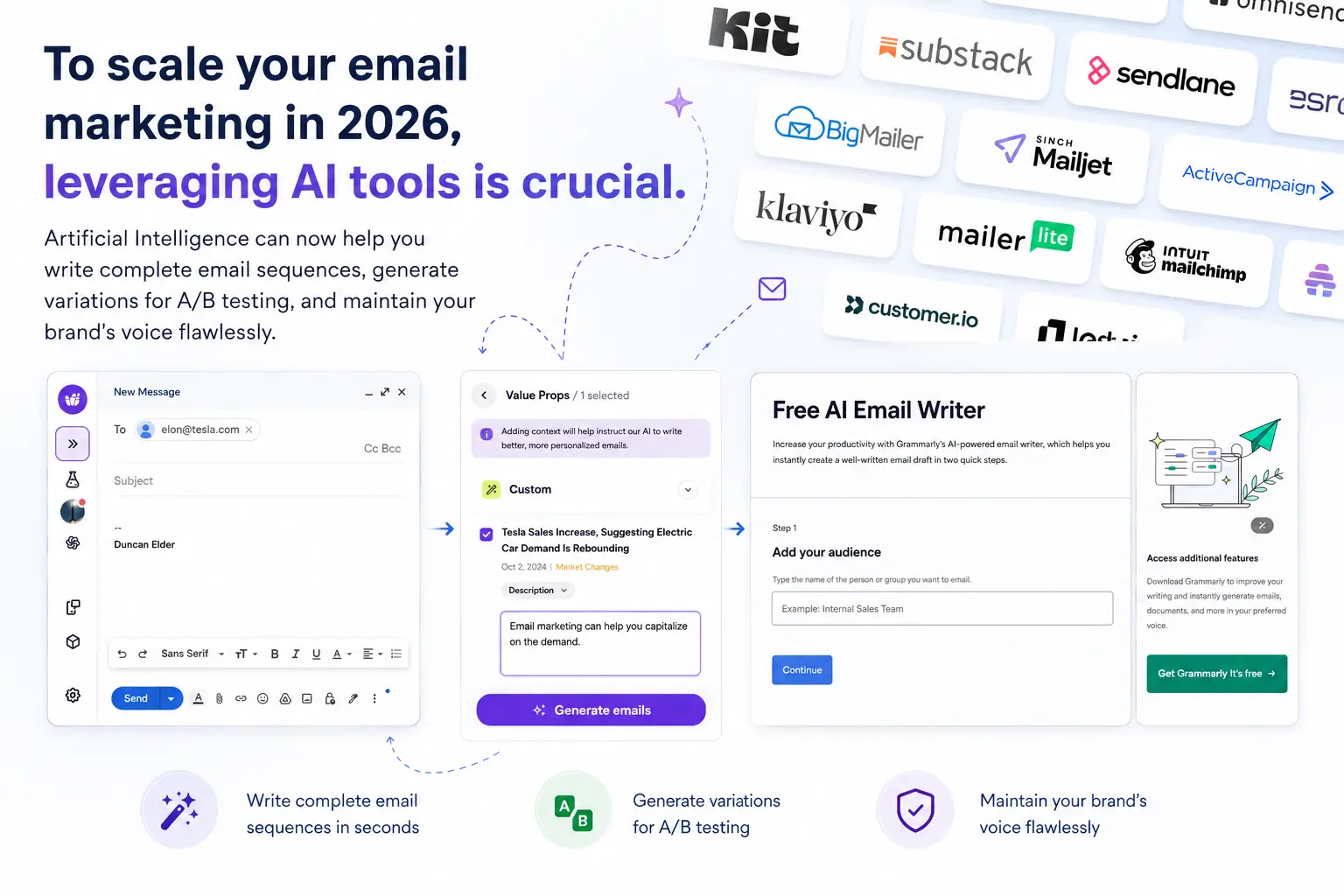
To scale your email marketing in 2026, leveraging AI tools is crucial. Artificial Intelligence can now help you write complete email sequences, generate variations for A/B testing, and maintain your brand’s voice flawlessly.
For example, an AI Email Writer can help you quickly create polished email drafts tailored to your audience, purpose, and desired tone, giving you a strong starting point to refine before sending.
However, even the best AI-written email will fail if sent at the wrong time. Establish a consistent sending pattern based on user behavior. For instance, do not send a welcome email the exact second someone subscribes; delay it by 15-45 minutes to bypass their reflex to ignore it. For abandoned carts, waiting 1 to 3 days is the sweet spot before re-engaging them.
Maintain Brand Consistency & Guarantee Legal Compliance
Finally, ensure your emails consistently match your brand’s voice. Following your brand rules builds trust and recognition. More importantly, you must strictly follow email marketing regulations like the US CAN-SPAM Act. For a full checklist on staying safe, read our breakdown of email marketing regulations and compliance to ensure you protect your brand.
To ensure compliance, ensure that every email includes a clear unsubscribe link, a valid sender domain, a physical mailing address, and an accurate subject line that reflects its content.
The Consequences of Non-Compliance: Violating legal standards leads to more than just legal trouble; misleading tactics and complex opt-outs trigger spam filters, permanently damaging your sender reputation. Once compromised, even valuable emails fail to reach inboxes. Conversely, respecting privacy through legal compliance boosts deliverability and builds audience trust.
Furthermore, it severely damages your overall sender reputation. Once your sender reputation is ruined, even your legitimate and valuable emails will fail to reach your subscribers’ inboxes. On the flip side, adhering to these legal best practices significantly improves your email deliverability and proves to your audience that you respect their privacy.
Conclusion: Ready to Send Emails That Convert?
In the fast-paced 2026 digital landscape, particularly with high mobile usage, capturing attention is difficult. If your subject line is not high-converting and your email content is not scannable or user-benefit-focused, readers will scroll past and fail to convert.
Always keep in mind that masterfully writing email marketing content is about cultivating long-term brand loyalty and genuine rapport, not just pitching products. By implementing these expert strategies, from personalizing for your specific audience to using frictionless CTAs and cutting-edge AI, you have the tools to generate emails that deliver significant value and drive growth.
I have a quick question for you: Which specific copywriting tactic will you implement in your very next campaign? Will you focus on mastering your preview text, or are you ready to experiment with the PAS framework? Discover more interesting, high-converting blog reads on our site.