
Let’s start this article with an example that helps you to better understand how email marketing personalization works. Imagine walking into your favorite local coffee shop, and the barista already knows exactly what you want to order. That level of personal connection makes you feel valued, right?
Now, think about your email inbox. How would you feel if a brand you love kept sending you completely generic, irrelevant offers? In today’s digital landscape, sending the same “batch-and-blast” email to your entire subscriber list is the fastest way to lose their attention. Consumers now expect high relevance, and true relevance demands data.
If your current strategy involves just adding “Hi [First Name]” to your subject lines and calling it a day, you are practically invisible to your audience.
In 2026, true email marketing personalization goes far beyond basic name tags; it is about delivering a custom-built, 1-on-1 experience based on your subscribers’ unique behaviors, purchase history, and intent. Let’s explore what real personalization looks like, why it is the ultimate growth lever for your business, and how you can implement advanced strategies to make your emails incredibly clickable.
What is Email Marketing Personalization? (Segmentation vs. Hyper-Personalization)
Before we explore high-level implementation, we must address the fundamental query often posed by growth experts: What actually is the difference between basic segmentation and hyper-personalization?
Many marketers mistakenly equate personalization with merely inserting a name into a subject line, but in 2026, this simplistic approach is obsolete. Traditionally, basic segmentation involves categorizing your audience into broad buckets, such as geographical location, age demographics, or general interests, and delivering a uniform message to that entire group.
In stark contrast, hyper-personalization leverages artificial intelligence and real-time data streams to curate a bespoke 1-on-1 journey for every individual subscriber. Rather than relying on basic identifiers, it conducts a deep analysis of specific browsing behaviors, historical purchase data, and engagement patterns to present the precise content required at that moment.
When you transition to hyper-personalization, your outreach evolves from a generic promotional blast into a sophisticated, personal dialogue that resonates with the recipient.
Why Do Personalized Emails Skyrocket Open Rates and ROI?
Now, you might be wondering: Does personalization actually improve open rates and generate a real return on investment (ROI)?
The empirical evidence points to a resounding “yes.” Statistics indicate that when you monitor user actions to craft tailored messages, open rates can surge by up to 74%. In fact, data reveals that these personalized campaigns achieve click-through rates (CTR) that are 152% superior to generic outreach efforts.
Implementing hyper-personalization does more than just inflate your engagement metrics; it fundamentally shifts your revenue potential and long-term brand equity:
- Increased Transaction Velocity: Insights from Adobe suggest that tailored emails drive six times (6x) higher transaction rates compared to those without personalization.
- Significant Conversion Uplift: Reports from eMarketer highlight that companies leveraging advanced data for hyper-personalization see conversion rates skyrocket by 10x.
- Deepened Brand Advocacy: According to Salesforce research, 70% of consumers feel that a company’s ability to recognize their specific needs directly influences their loyalty and likelihood to remain a customer.
The Foundation: Collecting “Zero-Party” Data Safely
As data privacy laws become stricter, a major concern for modern marketers is: How do I collect personalization data without violating privacy?
The answer lies in shifting away from sneaky tracking pixels and embracing Zero-Party Data. In an era where Apple Mail Privacy Protection is breaking open rates and third-party cookies are dying, zero-party data is the ultimate solution. Simply put, zero-party data is the information that a subscriber proactively and intentionally shares with you. Instead of guessing what your customer wants based on hidden tracking, you simply ask them.
Progressive Profiling: How to Ask Instead of Track
You might think that asking too many questions will scare subscribers away. That is true if you ask everything at once. The secret is Progressive Profiling.
Don’t ask for their entire life story upfront. Instead, ask one or two simple questions at every meaningful touchpoint. For example:
- At Signup: Ask for their email address and one primary topic of interest.
- In the Welcome Email: Ask how often they want to hear from you (weekly vs. monthly).
- Post-Purchase: Send a quick survey asking what problem they were trying to solve.
Over 6 to 12 months, this strategy builds a deeply rich profile for each subscriber without ever feeling intrusive or violating privacy laws.
Advanced Email Personalization Strategies for 2026
Once you have collected the right data, it is time to put it to work. Here are the most advanced, high-converting personalization strategies you must implement in 2026:
1. Leverage Dynamic Content Blocks
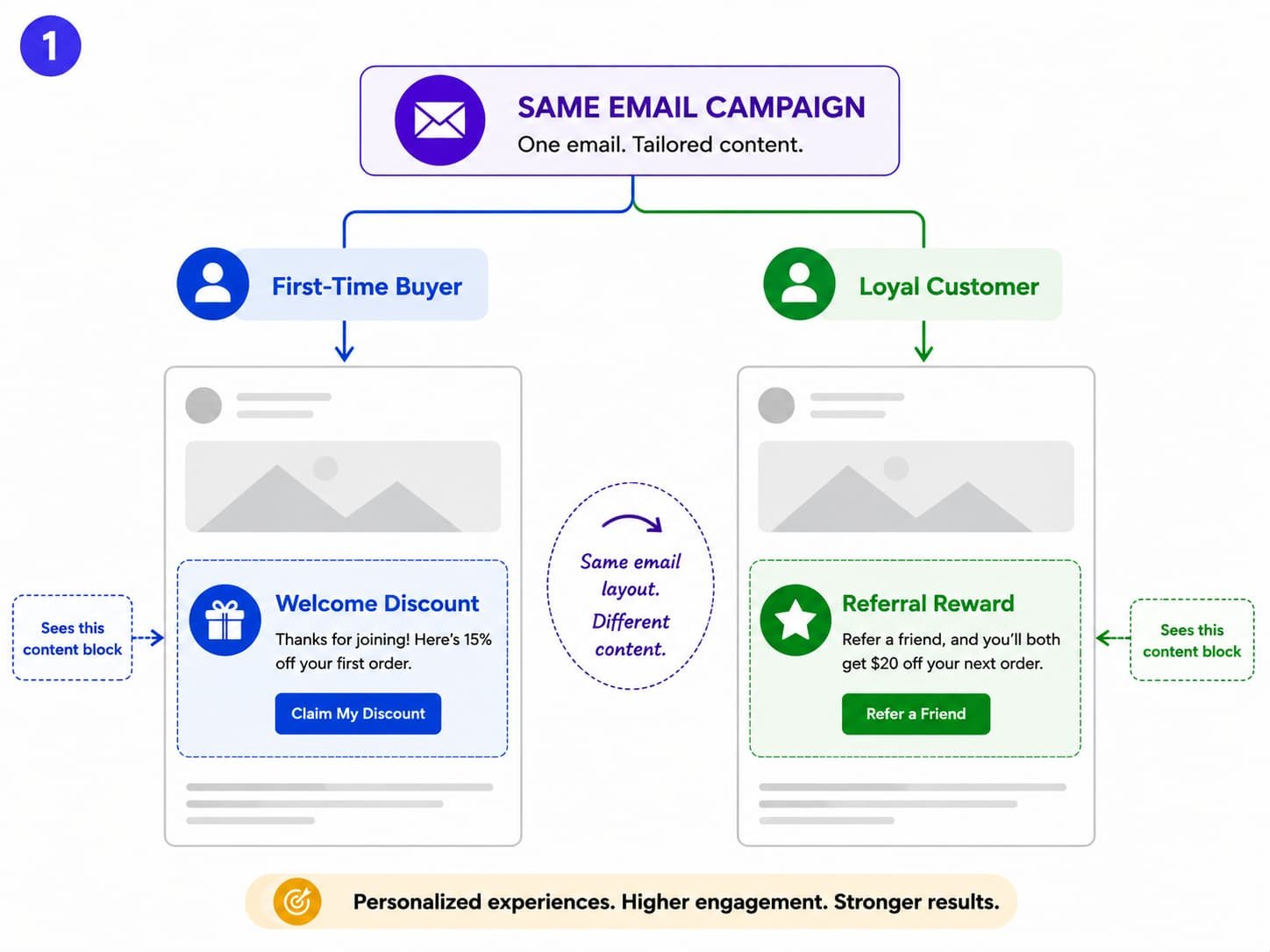
Instead of creating 10 different emails for 10 different customer types, use dynamic content blocks. These are specific sections within a single email that change automatically based on the recipient’s attributes or behavior.
For instance, a first-time buyer might see a “Welcome Discount” block, while a loyal customer opening the exact same campaign sees an exclusive “Referral Program Reward” block.
2. Personalize by Customer Lifecycle & Milestones
Where is your customer in their journey? New leads require educational content to build trust, while repeat customers respond better to advanced features or exclusive VIP offers. Additionally, do not forget milestone triggers. Celebrating a customer’s birthday or their 1-year anniversary with your brand fosters an emotional connection that drives 7x higher transaction rates than standard promotional emails.
3. Hyper-Personalization by Financial Identity & Returns
This is a highly advanced e-commerce strategy. Personalize your emails based on how people pay and return items:
- Financial Identity: A customer who uses “Buy Now, Pay Later” (BNPL) values budget flexibility, whereas a customer who always pays full price demonstrates high brand confidence. Tailor your messaging to highlight flexible payments for the former and premium, early-access products for the latter.
- Frequent Returners: If a customer frequently returns items, stop sending them aggressive sales emails. Instead, send them sizing charts, fit guides, and customer reviews to build their confidence before their next purchase.
4. Contextual Personalization: Weather and Location Triggers
Meet your customers exactly where they are by using real-time external context. For example, using real-time weather data allows you to automatically trigger emails for winter jackets when a cold front hits a customer’s city, or cooling gear during a heatwave.
Similarly, instead of sending a generic “Our Bestsellers” email, use geolocation to send a “Trending in [Customer’s City] This Week” email to create immediate local relevance and social proof.
5. Set Up Behavior-Based Triggers (Cart & Browse Abandonment)
Timing is everything. Behavioral triggers are automated messages sent instantly when a user takes a specific action.
- Cart Abandonment: When someone leaves items in their cart, sending a reminder email within the first hour can recover up to 29% of abandoned sales.
- Browse Abandonment: If a user views a specific product multiple times but doesn’t add it to the cart, capturing that interest with a personalized follow-up email can generate 3x more revenue than a standard promotional blast.
The Role of AI in Email Personalization: Predictive Modeling & Send-Time
As email marketing evolves, a common question arises: How can AI make email personalization more accurate?
The answer lies in moving beyond simple automated responses to predictive analytics. Modern email platforms use machine learning to identify patterns in user behavior, predict engagement outcomes, and automatically adjust campaigns to improve results.
1. Predictive Behavioral Modeling to Prevent Churn
Predictive behavioral modeling uses machine learning algorithms to identify likely future actions based on historical behavior patterns, enabling proactive triggered campaigns before traditional trigger events occur. AI can predict churn risk (the likelihood that a customer will stop using a company’s product or service) by identifying subtle behavioral changes, such as decreased login frequency or shifted feature usage patterns.
By triggering a personalized retention campaign before the customer mentally disengages, businesses achieve 3x higher save rates than reactive win-back attempts.
2. Send-Time Personalization Models
Not every subscriber checks their email at 9:00 AM. AI-driven platforms analyze historical engagement data to determine the exact moment each subscriber is most likely to open their emails. By using “predictive send-time optimization,” AI ensures your email lands at the top of the inbox during a user’s unique “Optimal Engagement Window,” drastically improving open rates.
Best Practices for Personalized Email Copywriting & A/B Testing
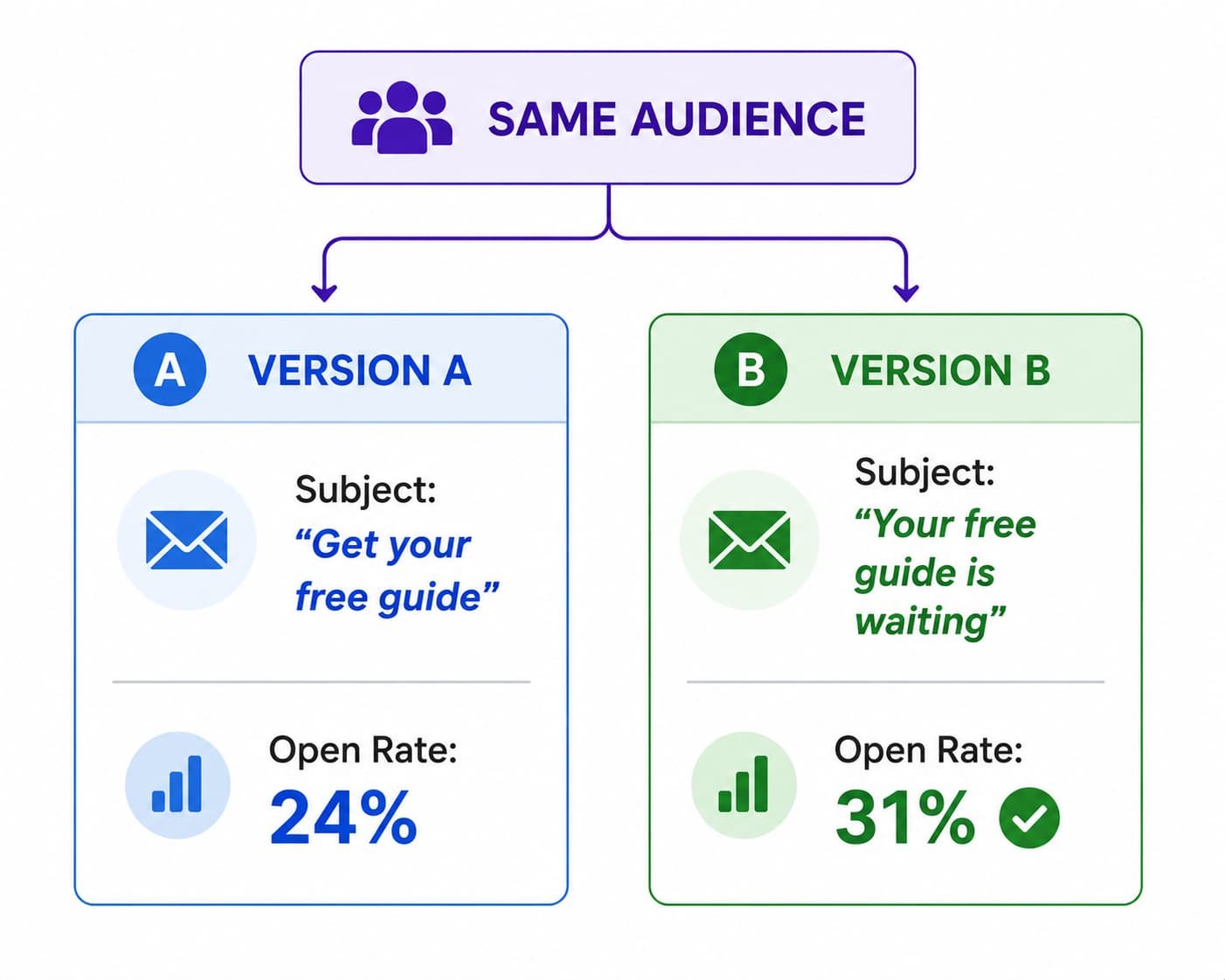
Once your personalization strategy is set, you might ask: How can I test if my personalized emails are working?
When writing email marketing content, the success of your email heavily relies on how you write and test your copy.
- Write Conversationally: Marketing emails perform best when they sound like they’re from a person, not a faceless corporation. Use natural language, second-person pronouns (“you”, “your”), and maintain an authentic voice.
- Focus on Benefits Over Features: Recipients care about how your offering solves their problems, not just what it does. Instead of just listing features, focus on the benefits to give your subscribers a powerful, emotional reason to invest.
- A/B Test Continuously: A/B testing reveals what resonates with your specific audience. Always test one variable at a time, whether it’s the subject line, CTA copy, or dynamic content blocks, so you know exactly what drove the performance improvement.
Measuring Success: Key Metrics for Personalized Campaigns
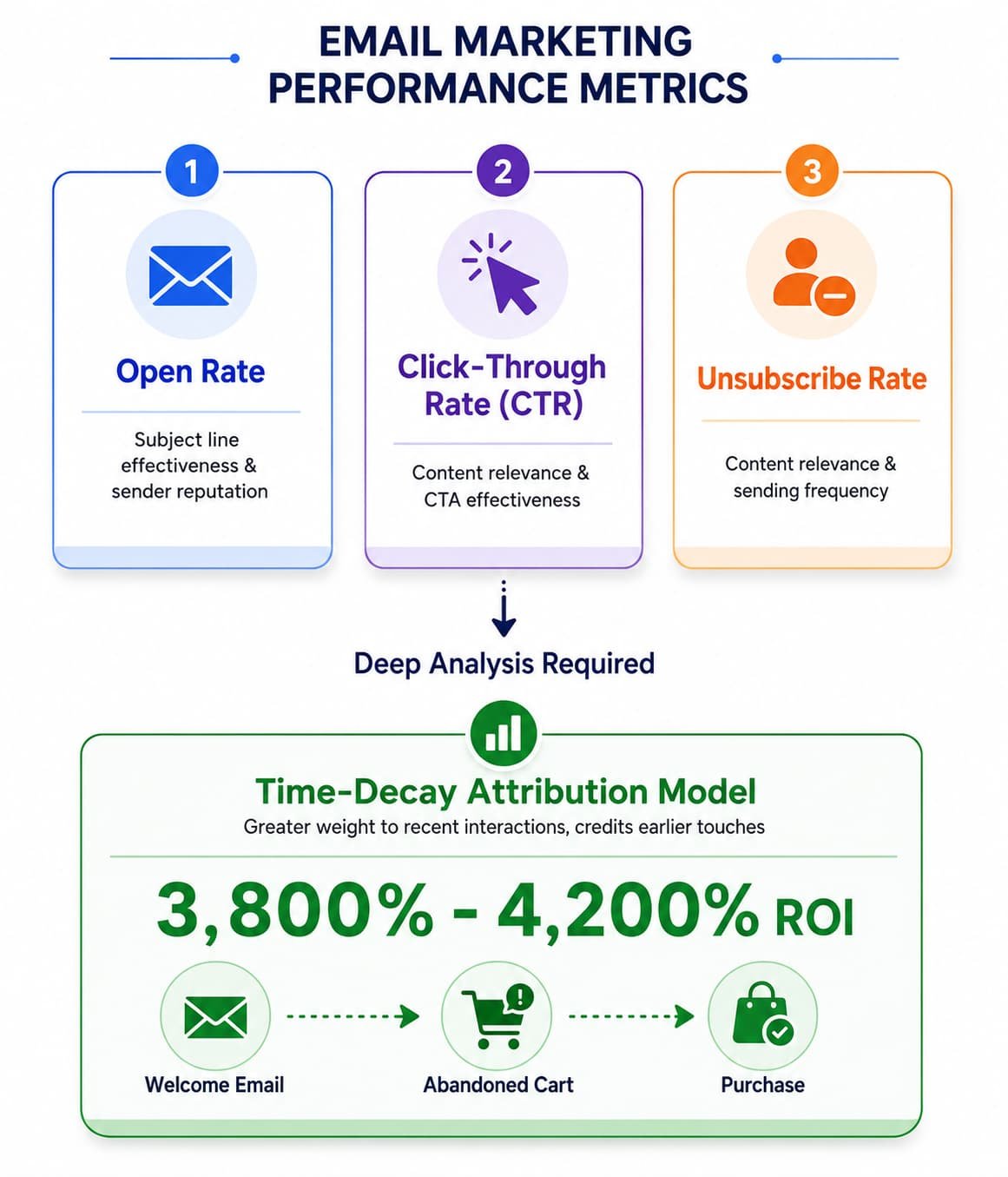
To evaluate if your hyper-personalization is actually driving revenue, tracking the right metrics is essential. Standard metrics like open and click rates provide surface-level insights, but behavioral campaigns demand deeper analysis.
Track these key metrics to evaluate email performance:
- Open rate: Measures subject line effectiveness and sender reputation.
- Click-through rate (CTR): Indicates content relevance and CTA effectiveness.
- Unsubscribe rate: Signals content relevance and sending frequency issues.
For true ROI calculation, use advanced Time-decay attribution models that assign greater weight to recent interactions while still crediting earlier touches (like a welcome email or an abandoned cart reminder). When executed and measured correctly, established behavioral programs commonly show 3,800% to 4,200% returns.
Top Email Platforms for Personalization in 2026
With so many tools available, marketers often ask: Which email platform is best for marketing automation and personalization in 2026? Here are the top platforms leading the industry:
- Insider One: Best for enterprise teams needing true cross-channel orchestration (email, SMS, WhatsApp) and AI-backed predictive segmentation in real time.
- HubSpot: Ideal for B2B companies wanting deep CRM integration and visual automation workflows based on lifecycle stages.
- Braze: Popular for real-time behavioral triggers and advanced journey orchestration, especially for mobile-first brands.
- Klaviyo: The go-to platform for ecommerce brands, offering powerful event-based automation triggers (like cart abandonment) and predictive analytics for customer lifetime value.
Conclusion: Ready to Build Real Relationships?
In 2026, email marketing personalization is no longer just about merging a first name into a subject line. It is about deeply understanding your customer’s behavior, leveraging Zero-Party data, predicting their needs with AI, and delivering a 1-on-1 contextual experience.
By implementing dynamic content blocks, behavioral triggers, and conversational copywriting, you transform your emails from annoying promotional blasts into highly anticipated, valuable messages.
Now, we have a quick question for you: Which advanced personalization strategy are you going to implement first? Will you start collecting Zero-Party data, or will you set up an AI-driven predictive churn campaign? Let us know in the comments below!